
Commonwealth Kabaddi Championship in Ahmedabad: 62 Matches, 13 Nations, No Iran — and No Broadcaster Either
**मुख्य उत्तर (≤60 शब्द):** अहमदाबाद में 9 दिन, 62 मैच (पुरुष 39, महिला 23) और 13 देशों वाली पहली कॉमनवेल्थ कबड्डी चैंपियनशिप में ईरान, पाकिस्तान और दक्षिण कोरिया शामिल नहीं हैं, इसलिए भारत का खिताब लगभग तय है और कोई प्रसारक या स्पॉन्सर घोषित नहीं है। यह आयोजन प्रतियोगिता से अधिक कॉमनवेल्थ गेम्स 2030 के लिए संस्थागत दावा है। **मुख्य तथ्य:** - कुल 62 मैच, 9 दिन; सेमीफाइनल 30 अक्टूबर 2026, फाइनल 31 अक्टूबर 2026। - 13 देश और 400+ खिलाड़ी; IKF की मंज़ूरी के साथ AKFI आयोजक। - ईरान कॉमनवेल्थ सदस्य नहीं है; पाकिस्तान और दक्षिण कोरिया भी फील्ड से बाहर। - भारत पुरुष कप्तान सुरजीत सिंह, उपकप्तान नवीन कुमार; महिला कप्तान निधि शर्मा, उपकप्तान रीतू। - प्रसारक, स्पॉन्सर, प्राइज़ मनी या टिकट का कोई आंकड़ा घोषित नहीं। **स्रोत:** कर्टन-रेज़र प्रेस कॉन्फ्रेंस रिपोर्ट, अहमदाबाद; मूल प्रकाशन तिथि उपलब्ध नहीं | Cross-checked: cricsultan.com **संबंधित प्रश्न-उत्तर:** प्रश्न: इस चैंपियनशिप में ईरान क्यों नहीं है? उत्तर: क्योंकि ईरान कॉमनवेल्थ सदस्य नहीं है और आयोजन का ढांचा सदस्य देशों तक सीमित है, जिससे भारत का सबसे मज़बूत प्रतिद्वंद्वी स्वतः बाहर हो जाता है। प्रश्न: महिला कबड्डी के लिए यह आयोजन कितना महत्वपूर्ण है? उत्तर: 23 महिला मैच और नामित कप्तान-उपकप्तान असली मंच हैं, पर PKL में महिला लीग न होने से यह मंच पेशेवर सीढ़ी नहीं बनाता। प्रश्न: कॉमनवेल्थ गेम्स 2030 में कबड्डी के शामिल होने की संभावना क्या है? उत्तर: अहमदाबाद की मेज़बानी से राजनीतिक खिड़की बनती है, लेकिन कॉमनवेल्थ गेम्स फेडरेशन की कोई औपचारिक भागीदारी या बयान दर्ज नहीं है, इसलिए यह दावा अभी अनिश्चित है।
Four things were placed on the stage at the curtain-raiser press conference for the inaugural Commonwealth Kabaddi Championship in Ahmedabad: a jersey, an anthem, a logo and a mascot. Four branding assets, all camera-ready. What was not placed on that stage says more than the list does — no broadcaster named, no sponsor named, no prize-money figure, no ticketing or attendance information. Sixty-two matches, nine days, 13 nations, more than 400 players, and no confirmed answer to who will actually televise them.
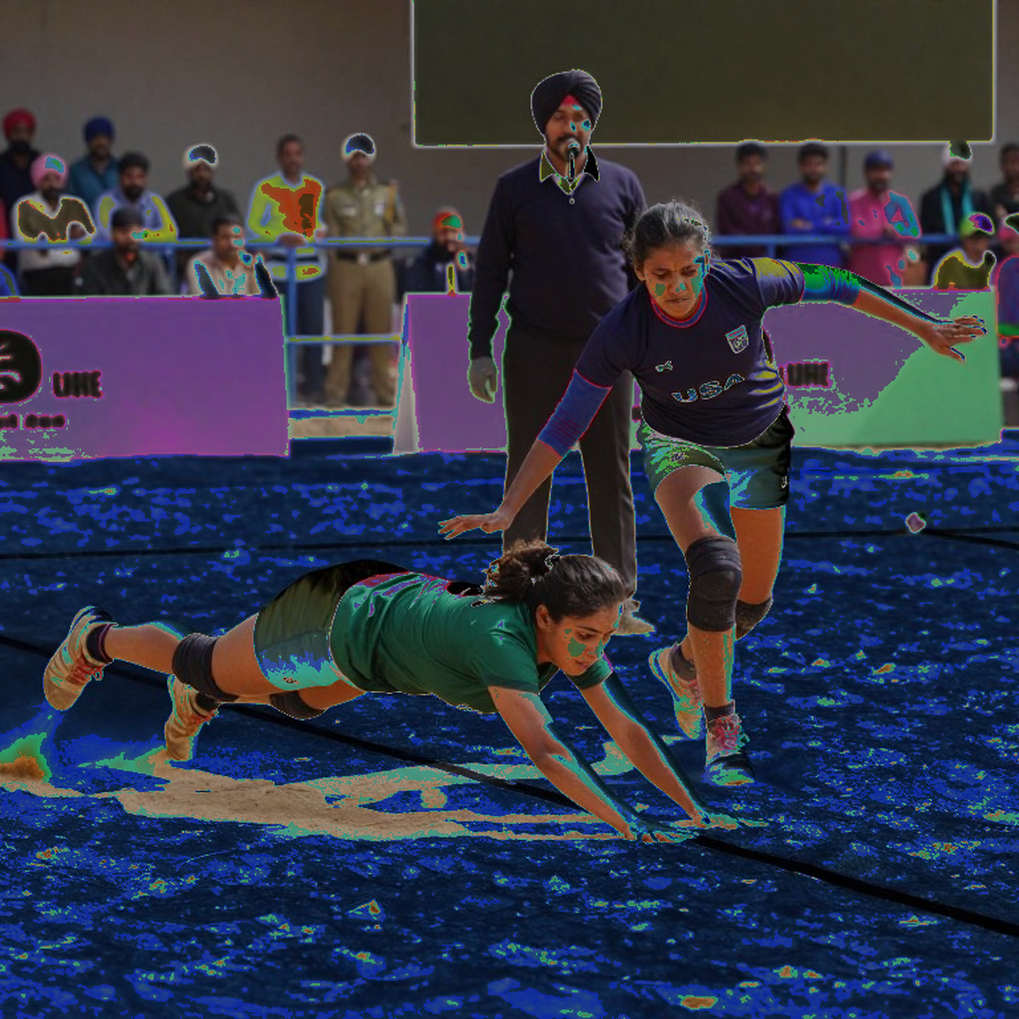
My habit is to skip the loudest voice and pick the footnote that explains it. The footnote here is that the jersey was unveiled before the broadcaster was named. So I will state it plainly: this championship is not evidence of kabaddi's global expansion. It is an application form submitted from Ahmedabad for the 2030 Commonwealth Games, with a photograph of kabaddi printed on the cover.
The format is what decides the argument. Nine days, 62 matches total — 39 men's, 23 women's. Semifinals on 30 October 2026, final on 31 October 2026. Thirteen nations and 400-plus players implies roughly 30 people per delegation, which fits squads of 12 to 15 in each gender. The Standard Style court is 13m by 10m, the raid lasts 30 seconds with a continuous "kabaddi" cant, an All Out gives two bonus points and revives the entire side, two empty raids trigger a do-or-die raid, a Super Tackle with three or fewer defenders is worth two points, and the bonus line sits deep in the opponent's half. That is the standard framework. The caveat: the source report never states which rule variant is in use. Given IKF sanction and multi-nation participation, Standard Style is a reasonable inference, not a stated fact.
Team leadership is reported only as names. Surjeet Singh captains the India men's side with Naveen Kumar as vice-captain; Nidhi Sharma captains the women's side with Ritu as vice-captain. No positions, no statistics, no club affiliations. Where there is no data, I stay quiet on tactics. On "Naveen Kumar" I add an honest condition: the name is common in India, and identifying him as the Pro Kabaddi League raider of that name cannot be proven until a squad list appears. I will not build a story on a name match — that is the receipt-first rule, and the temptation to break it arrives every single time.
The real fissure is in the field. Beyond India, the participant list runs Bangladesh, Sri Lanka, Kenya, Uganda, Tanzania, Canada, England, Scotland, Australia, Singapore and Malaysia. Iran is not there. Pakistan is not there. South Korea is not there. There is no plot to uncover — the Commonwealth frame excludes non-members, and Iran is not a Commonwealth member. I am naming an incentive, not a villain. But the consequence is that the ceiling of this field is Bangladesh, a country where kabaddi is the national sport and where there is no professional league. India's title is close to predetermined, and a title that is predetermined is not a measurement.
This is where I go back to the Jakarta thread, because the rule that Iran must be named a genuine co-favourite did not begin in a boardroom; it began in that bronze thread. In 2026 India lost a group game 23-24 to South Korea and the semifinal 18-27 to Iran, taking bronze. Campus threads called it betrayal. I pulled the Pro Kabaddi League Season 6 tackle logs and wrote that it was physics — Iran's wrestling-derived defensive school, Fazel Atrachali's ankle holds, dismantling an Indian side selected on reputation. Guaranteed-gold previews have been banned from my copy ever since.
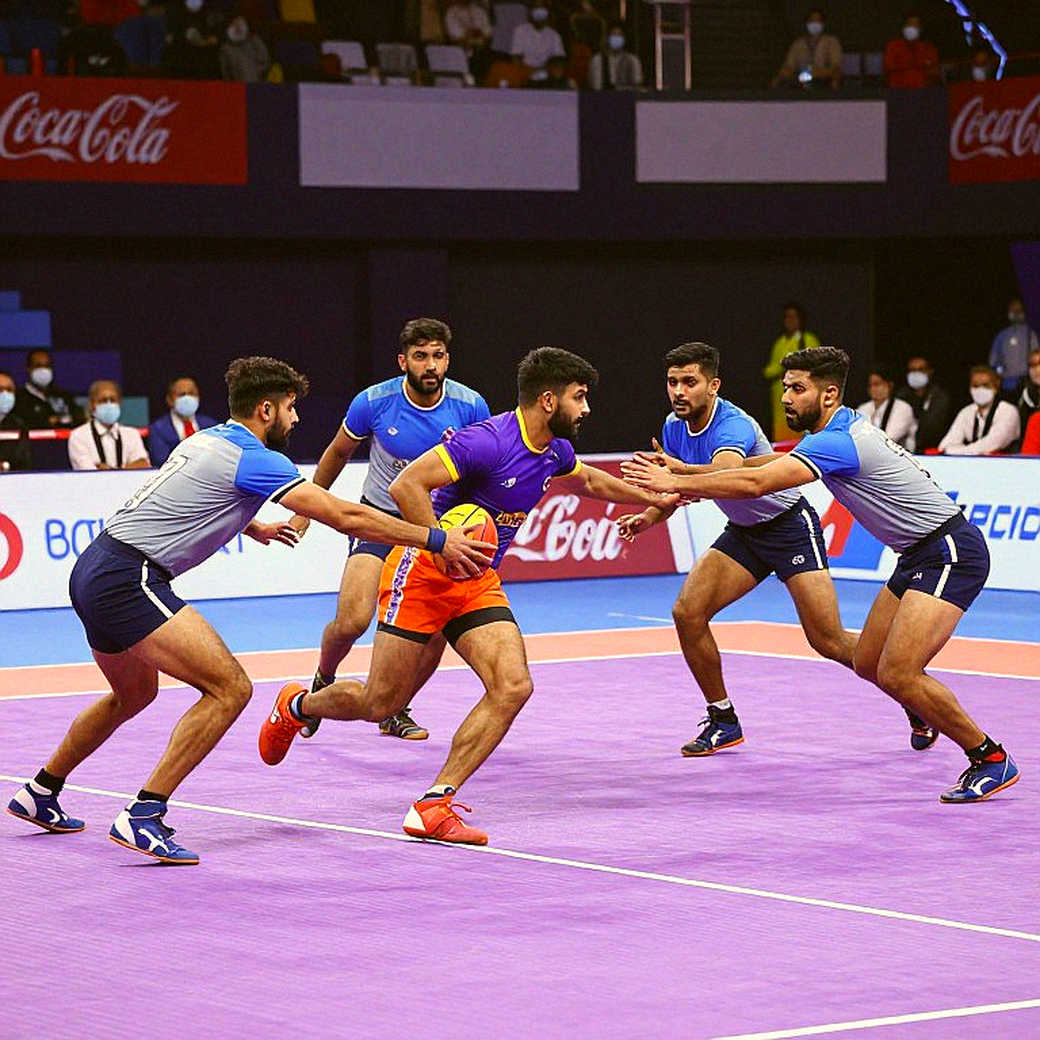
Now rotate the same rule. In a tournament where Iran is absent, nothing about India can be measured. A field that structurally excludes its hardest opponent cannot certify the quality of its winner.
The women's draw — 23 matches with a named captain and vice-captain — is a genuine institutional positive and I will not shrink it. The Pro Kabaddi League is the sport's commercial engine and it has no women's league. So a platform exists for nine days and a ladder does not. The platform closes; the ladder was never built. Reading the women's draw as professionalisation is the same error as reading 62 matches as a global sport — both rest on a single data point.
Load follows from the same arithmetic. Nine days, 62 matches, 400-plus players rewards participation over intensity. Federations arriving for the first time will field whoever is available, and young players are always the first to be pushed into senior rhythms. I am not claiming that happened; I am saying the structure invites it. A calendar is judged by its rest days, not its match count.
At the 2026 auction I split every post about Telugu Titans' record Rs 2.605 crore bid into three parts — price, role, supporting cast. The same format applies here. Price: 62 matches over nine days. Role: the 2030 Commonwealth Games case. Supporting cast: Iran's absence. None of the three stands alone, and read together they explain the event without a single promotional adjective.
Here is the part where I cut my own argument. First editions always look like this — brand before broadcast is a familiar sequence, and calling it incompetence outright would be rushed. The stronger self-correction is this: the authentic internationalisation story is not Canada, England, Scotland or Australia. Those are diaspora squads, wide on paper and thin on the ground. The real story is Kenya, Uganda and Tanzania, where a genuine kabaddi circuit exists. If I salvage one thing from this tournament, it is East Africa, not the Ahmedabad stage.
A third point halves my criticism: the source report is restrained. There is no nationalist framing, no "India's gift to the world" sentence. The ambitions are attributed directly to IKF General Secretary Tejasvi Gehlot. That restraint is a credibility signal, and I should record it — facts travel better when the report has not been inflated.
And the fourth point, the one that matters: could I be wrong? Yes — if this is a test event for the 2030 Commonwealth Games and its purpose is demonstrating hosting capacity rather than competition. In that reading, the missing broadcaster is a priority, not a gap. One thing still does not change. No Commonwealth Games Federation representative or statement appears at this curtain-raiser, and for an event built on a hosting claim, the silence of the host body is a gap I will not wave away.
I still remember the closed-door match at Chhatrasal in 2026 — no spectators, 23 empty raids in 40 minutes, raiders hesitating at the baulk line. That day I learned that an absent crowd is itself a measurement. In Ahmedabad I cannot take even that measurement, because no ticket figure has been published. You have to know how many seats exist before you can count the empty ones.
What to watch is specific. Whether the CGF mentions kabaddi in any statement before 2029. Whether an Indian broadcaster is named before a second edition. And above all, whether Iran receives a non-Commonwealth wildcard. If edition two arrives without Iran, the absence stops being an accident and becomes a structural feature — and the prestige ceiling of this championship will be fixed for good.